

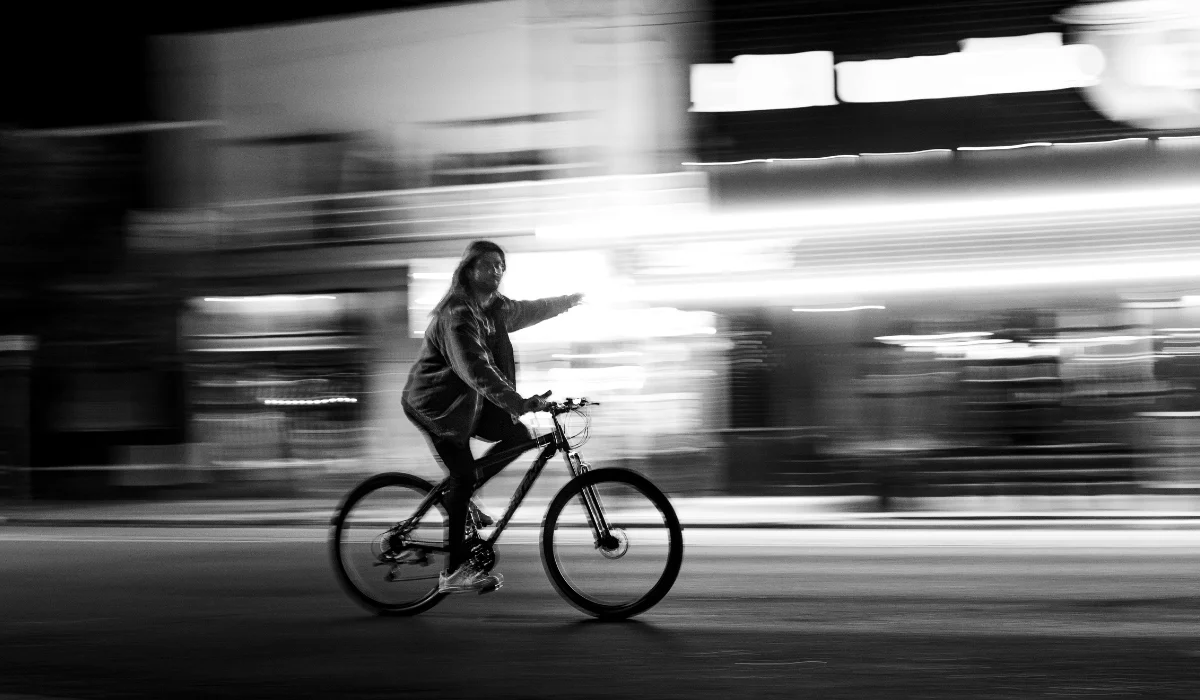
The beauty of every motion is beautifully captured in slow-motion videos. When a movie uses slow motion to heighten suspense or show a passionate or love scene, it puts the viewer on the edge of their seat. Experience a new emotion by seeing a pivotal moment from your life unfold in slow motion. The correct feelings are evoked, needless to say.
Envision this, you pop the question to the one you love, and you record their answer in slow motion. Wouldn’t that make us feel all warm and fuzzy inside?
So, get ready for something special in this article. If you’re looking for a slow-motion camera that can catch every detail, we’ve got you covered with our top picks. If you’re looking for a super slow motion camera that can catch every detail with extreme precision, we’ve got you covered with our top picks. Keep reading!
A high-quality slow motion camera ensures that every detail of your motion is captured flawlessly. A high-quality slow motion video camera ensures that every detail of your motion is captured flawlessly and preserved for a lifetime. To capture every beautiful and happy movement of your life and cherish it as your lifelong experience, and to feel the past movement like it is happening now by watching it in Slow Motion video. Investing in a reliable slow motion camera can help you relive these precious moments vividly. You should buy any of the Slow Motion Cameras mentioned to experience all these beautiful moments happening again in life.
How does slow motion operate?
Frame rate, or how many frames your camera records in a second, should be your first consideration. The type of slow motion camera you use determines how smoothly these frames are captured. You’ll have more information when you slow down the video later to capture those fluid and regular motions instead of a jerky and abrupt scene if you capture more frames per second.
What frame rate is ideal for slow-motion videography, then? Finding your minimal frame rate is the first thing to do. The lowest frame rate you should usually use to produce smooth, slowed-down film is 60 frames per second. A good slow motion camera can easily handle 60fps or higher for flawless playback.
These days, a lot of slow-motion cameras can record at 60 or even 120 frames per second in 4K. Choosing the right slow motion camera will give you high-resolution footage at these faster frame rates. This allows filmmakers to work with slow-motion material at such high resolution and quality. Before we get behind the cameras, let’s take a moment to appreciate the beauty and excitement that slow motion can offer.
Therefore, examining cameras with higher frame rates is a smart first step if you’re interested in slow-motion cameras. Above all things, this is taken into account in the list below.
Second, knowing what you’ll be filming and where you’ll share your work from the beginning is also a good idea. Picking the right slow motion camera depends on both your shooting environment and sharing platform. For example, it’s probably a good idea to know that Instagram doesn’t support 4K videos before purchasing if you’re more concerned with amazing image quality but intend to share your films on the platform.
It won’t be the best option to buy a more expensive slow-motion camera merely to film at a greater frame rate. Naturally, though, you’ll want to spend more on slow-motion cameras with sophisticated capabilities if you intend to use your recordings for other purposes, share them online, or work as an official videographer.
Finally, be aware of your budget. There are many possibilities, and you don’t always need the most expensive tools to capture amazing slow-motion footage. All it takes is a glance at what’s available and how they stack up against one another.
I’ve included links to “more specs” for each of the ten cameras listed below; if the summary isn’t sufficient, spend some time reading each one. It can be overwhelming to purchase a new camera, but if you’re searching for the greatest slow-motion camera, you should be able to find something here.
6 Best Slow Motion Cameras
1. Phantom Flex 4K Slow Motion Camera:
At 1000 frames per second, the Phantom Flex 4K Slow Motion camera consistently creates a 4K image with a high level of detail. This top-tier slow motion camera is used in professional film production for its unmatched precision. With Cinemag recording media, your workflow skills will be automatically enhanced, resulting in a highly smooth product.
In addition, the Phantom Flex 4K is a cinema-grade professional camera. All of your favourite celebs’ Oscar Slow Motion videos use Phantom as their Slow Motion camera.
Features:
- 938.0 frames per second at 4096 x 2304
- Superior 35 mm colour sensor
- 250 ISO
- Earnings EI 800-9000
- Memory: 64 GB or 128 GB
- Supports dual-link 4K and 3G-SDI video outputs.
- The V-lock, gold, and Hawk Woods reel power battery mounts are all available.
- Accessible through the remote and on-camera menu
- With Cine Raw, Cinestation IV comes with a 10-gigabit Ethernet cable.
With the Phantom Flex4k, you can capture flawless slow-motion videos with minimal noise. It additionally has upgraded versions of the most popular video editing and colour grading programs. Plus, it works with the common sync sound frame rates.
The lens mount options on this Slow Motion camera are convertible with the PL and offer operator versatility. It even has an on-camera control interface view option.
2. DJI Pocket 2 Slow Motion Camera:
When it comes to action cameras, DJI is a well-known brand. The DJI Pocket 2 is an exceptional slow motion camera for capturing dynamic action. But even when it comes to slow-motion cameras, it excels. High dynamic range (HDR) movies, created by separating the lighting settings by area and layering the image, allow for videos to explode with genuine detail, and one of the greatest cameras for this is the DJI Pocket 2 Slow Motion.
Moreover, it produces the highly detailed footage that you will ever receive from Slow Motion cameras.
Features:
- With the DJI Pocket 2, you can capture stunning slow-motion footage in one of three unique ways: from the front, the rear, or both.
- 8x Zoom
- Take steady 8x zoom pictures with flawless, amazing footage with the DJI’s ideal balancer.
- Features recording with immersive sound
- Four built-in microphones on the grip allow for 5.1 surround sound recording.
- The audio direction of magical items can be adjusted to ensure a clear view of the subject, no matter where the camera is directed.
- Automatically zoom in as the volume increases. Using the built-in microphones also reduces wind noise.
3. Soni ZV-1:
If you’re looking for an automatic camera with the best face-tracking capabilities, go no further than the Soni ZV-1. This versatile slow motion camera is ideal for vloggers and content creators alike. Because of how well our Slow Motion camera tracks your objects, you won’t have to worry about them moving around. Plus, the camera takes care of the video’s blurriness, so it seems like Slow Motion.
Features:
- More precise hybrid autofocus with improved actual-time eye autofocus and monitoring.
- Image equilibrium, which prevents trembling in any situation, including those with bumps, and when walking.
- Quickly choose between two different settings for the blurred backdrop effect.
- A 3.0″ LCD screen that flips out to the side and tilts up and down makes taking selfies a breeze.
- 1-inch Exmor RS CMOS sensor with 20.1 MP stacked backlighting and DRAM. F1.8-2.8 ZEISS Vario Sonnar T lens has a wider aperture of 24-70 mm.
- The lighting in the product showcase shifts the emphasis from the subject’s face to the object, and the colour optimisation improves the depiction of skin tones.
- Includes professional video features. S-log 3/2 and HLG (hybrid log gamma)
- Thanks to its forward-facing built-in mic, detachable windshield mount, Jack Mic, and MI shoe, the Soni ZV-1 Slow Motion camera can capture high-quality audio in a single shot.
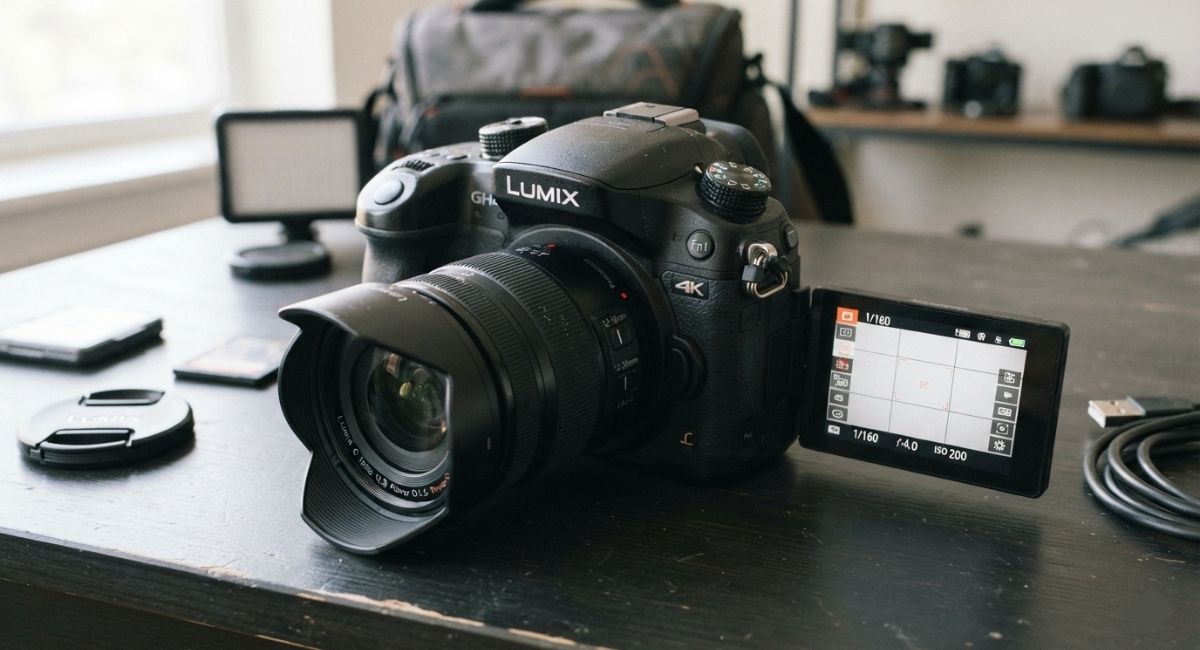
4. Panasonic LUMIX GH6:
Panasonic is a reputable brand that produces top-notch cameras. The Slow Motion effect, new to the Panasonic LUMIX GH6, allows you to capture those picture-perfect moments.
5.7K at 60p, 4K at 120p, and 10-bit video are all possible with this camera’s 25MP sensor and 100MP Venus engine. One great thing about this camera is that you can record every moment of any event because all of the recording modes do not have a time limit.
On top of that, the Panasonic LUMIX GH6 provides ideal image quality and adaptability. With its ability to capture high-quality images with minimal compression, the Panasonic LUMIX GH6 is an ideal internal recorder for Apple ProRes 422 HQ and 422 cameras.
Features:
- Included with the Panasonic LUMIX GH6 is the greatest spectrum enhancer, plus the camera comes with the V log \ V gamut and + 13 stops of dynamic range already installed.
- With the best steady camera ever, you can capture the perfect slow-motion shot at any moment, even in low light. The 5-axis Dual I.S. 2 offers up to 7.5 stops of correction, and the camera can record full HD video at a frame rate of 12.5x.
- Increased resolution and bit rates, strong picture stabilization, and other features make this camera powerful and dependable.
- The Panasonic LUMIX GH6 lifts the bar with the new 25.2 megapixels Live MOS sensor without a low-pass filter, which will boost effective pixel count by more than twenty per cent for better resolution.
- Incredible 2D noise reduction, precise 3D noise reduction for films, and 3D colour adjustment for improved colour rendition, saturation, contrast, and hue are all features of this camera’s top-tier detail engine.
5. AKASO V50:
If this is your first time owning a slow-motion camera, then you should choose the AKASO V50. A beginner-friendly slow motion camera like this makes recording simple and enjoyable. Connecting to any device’s Bluetooth is a breeze with this camera, and it’s also quite easy to operate. It features a 2-inch touch screen for quick actions and is compatible with a wrist-worn wireless control.
Features:
- Voice control is one of the coolest and most unique features of the AKASO V50 Slow Motion camera. With voice commands like “Action Start Video” and “Action Photo,” users can operate the camera without using their hands.
- With the AKASO V50’s built-in sophisticated electronic optical image stabilisation, your footage will be super controlled and smooth because the camera can foresee your motions and compensate for camera shake.
- All the moments are captured from multiple angles thanks to its multi-angle view.
- The AKASO V50 has three different view angles—wide, medium, and narrow—so you can find the perfect one for your needs. If you want to record hilarious moments as they happen, you can use the distortion calibration function to permanently enhance your images distortion permanently.
- You may wear it when scuba diving up to 131 feet deep, and it’s waterproof. It’s great for all the water activities such as water skiing, diving, boarding, coordinated swimming, etc.
6. Fujifilm X-T4:
The Fujifilm X-T4 is a hybrid camera that uses state-of-the-art technology to capture both still images and video.
Features:
- Displayed above is the X trans-CMOS 4 sensor, which is the third generation.
- Built with the IBIS 16-55fps 2.8 for the sharpest, most precise shots.
- A small mechanism that stabilizes images taken inside the body.
- ETERNA Bleach Bypass film imitation mode for a high contrast look with low saturation.
- X-T4 to bring your videos to life with stunning natural colour photography.
- There is the ability to capture full HD \ 240p Super Slow Motion footage with autofocus intensity limited to 6EV.
- AF tracking efficiency, and better battery life.
- Three hundred thousand offers and fifteen frames every second.
- Superior quality movie footage at DCI 4K \ 60P in 10-bit colour.
7. Canon EOS 90D
The Canon EOS 90D is an excellent all-rounder that can be used for a wide range of purposes, including slow-motion video, due to its flexibility and affordability. You get a camera that is of high quality and has a long-lasting battery, in addition to a vari-angle touchscreen that is useful for making compositions that are creative compositions and shooting in a vertical orientation. This is all made possible by combining mirrorless video features and live view focusing with typical DSLR handling. The functioning of the EOS 90D “feels honed to brilliance” in every way, according to the opinion of our reviewer. However, it is important to remember that the fact that there is only a single memory card slot may be a major drawback for advanced users.
The device is capable of capturing film at a resolution of 4K and a width that covers the entire sensor. It is also able to shoot slow-motion footage at a frame rate of up to 120 frames per second in Full HD, with outstanding face and eye tracking that works well, resulting in results that are sharp and clear. Suppose you have a strong desire to take advantage of the wider variety of Canon lenses that are accessible for DSLRs with an EF mount. In that case, you should consider purchasing the 90D, especially if you are particularly interested in shooting at 120 frames per second. This is because many of the cameras in Canon’s lineup are restricted to shooting at 720p for 120 frames per second.
The 90D has a resolution of 32.5 megapixels, which places it squarely in the hybrid category, despite the fact that some of the cameras on this list are video-focused. When compared to a full-frame sensor, the APS-C sensor provides lenses with 1.6x more reach, which is beneficial if you are photographing sports or animals and require a greater amount of reach. However, it has a few limitations when it comes to low-light conditions, and according to our evaluation, it is only possible to increase the camera’s ISO to 1600 before you begin to lose textural detail.
Nonetheless, the EOS 90 is a capable tool for the creation of a wide variety of different types of photos, employing slow-motion when it is necessary to do so, and it has a headphone and microphone connector, an optical viewfinder, and uncropped 4K video at a reasonable price.
Features:
Type of camera:
Digital single-lens reflex
Sensor:
Advanced Photo System type-C
Megapixels:
32.5
The maximum allowable video resolution is:
4-K
The frame rate is as follows when the resolution is 4K:
Max 30fps
The frame rate is as follows when the resolution is set to 1080p:
Max 120fps
The frame rate when the resolution is 720p is
Max 60fps
The mounting for the lens:
EF or EF-S
Screen:
Touchpad with a vari-angle feature and a resolution of 1040k dots, measuring 3 inches
Autofocus:
Sistema de Autofoco de Dual Pixel CMOS
The level of the user is as follows:
Mid-level or intermediate
8. Sony ZV-1
In 2020, the Sony ZV-1 was released as a vlogging device for YouTubers. Therefore, it should come as no surprise that it has a number of functions designed especially for creating videos and other material. Consider the built-in microphone, hot shoe, 3.5mm connector, bright fixed wide-angle lens (a 24-70mm equivalent f/1.8-2.8 zoom), and flip-out screen, which is particularly useful for vertical video. Before using the ZV-1, I had my doubts, but its small size, 4K video, and sophisticated autofocus and subject identification convinced me. Because of this, it should be on this list instead of the Sony ZV-II, which isn’t a significant enough upgrade to be suggested.
You have a super-slow motion setting that records at 960 frames per second in addition to more conventional slow-motion settings like 120 frames per second. For the most dramatic effects, you can use this to slow down the action. Sony has made several strange choices here, such as a variable-angle screen that isn’t fully touch-controlled for self-shooting. Photographers can access shooting modes using the Mode Button in place of the viewfinder, flash, and mode dial. While the 1-inch sensor is smaller than those used in DSLRs and mirrorless cameras, it may provide sufficient focus fall-off to provide a sense of depth, and our reviewer thought that the colours were rich and natural for stills.
The Sony ZV-1 was created specifically with vloggers in mind, and the controls and body are ideal for that use. The slow-mo options are a terrific all-arounder for the remainder of your films and allow you to add some unique additional footage to your movie. You may speed up your creativity game while slowing down your footage using the Z-V1, which is small, inexpensive, and accessible.
Features:
Camera type:
Small
Sensor:
One-inch sensor
Megapixels:
20.1
Maximum video resolution:
4K
Maximum frame rate in 4K:
30 fps
Frame rate at 1080p:
Maximum 960 frames per second
Lens:
Equivalent to 24-70mm, f/1.8-2.8
Display:
3.0-inch free-angle touchscreen with 921k dots
Autofocus:
Quick Hybrid AF
Level of user:
Intermediate to entry-level
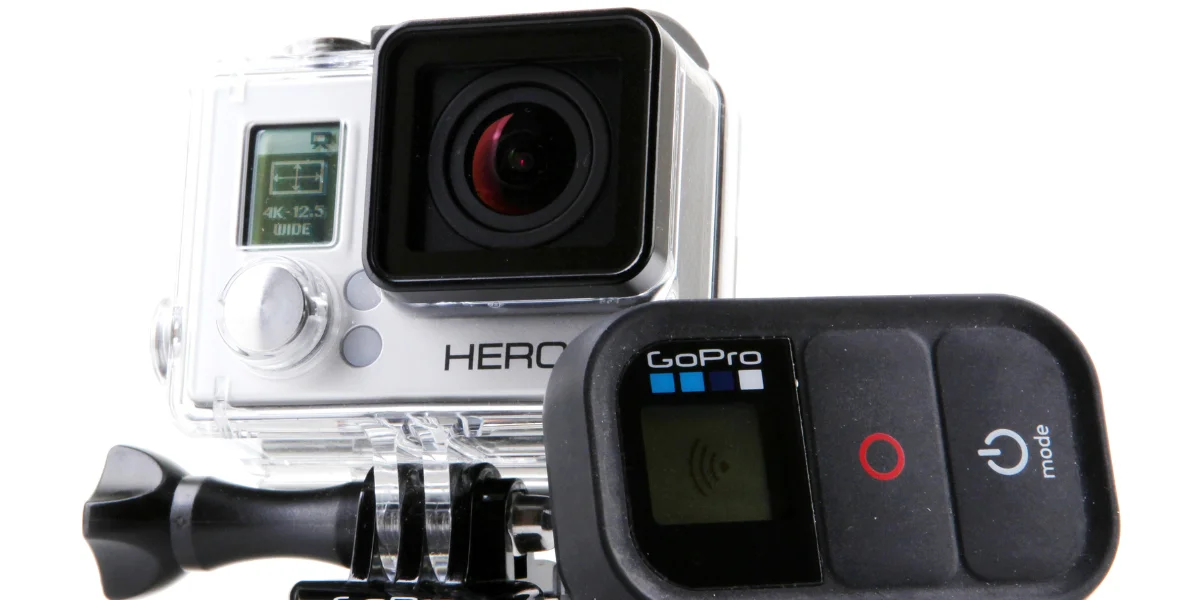
9. GoPro HERO13 Black:
Although the HERO12 Black had made significant improvements, slow-motion was not one of them; thus, the less expensive camera was a better option, so I kept the HERO11 Black on this list for a while. But GoPro added a ton of slow-motion-friendly capabilities for the 2024 HERO13 Black, making it the best model available—not only for slow-motion GoPros, but for slow-motion action cameras in general.
Burst Slo-Mo, the new video option, is, to put it plainly, absurd. It enables you to record incredibly high speeds for brief films (five to fifteen seconds). You can record at 120 frames per second with the camera’s highest video resolution of 5.3K, which is definitely not awful. However, this increases to 300 frames per second when the video quality is reduced to 900p, which is less than Full HD.
You may record at an amazing 400 frames per second if you lower the resolution to a still reasonable HD 720p. It is incredibly slow during playback, and it smoothly combines with the included stabilisation to produce amazing slow-motion photos. Although having all three in your back pocket offers you a great deal of choice, in practice, our reviewer found that he most frequently reached for the full-res 5.3K option.
Other than that, this waterproof pocket camera is fairly typical GoPro fare—a watertight pocket marvel that captures amazing video. This time around, the main fresh addition is the inclusion of modular lenses. While they are really cool when used, actually purchasing them can rapidly start to drive up the overall price of your system.
Features:
Weight:
5.6 oz / 159 g
Water-resistant:
33.0′ (10.0 m)
5.3K video
120 frames per second at most
900p video:
300 frames per second at most
720p video:
400 frames per second at most
Resolution of stills:
27 megapixels
Battery life:
Estimated time is two to three hours
10. Sony A7S III:
The third iteration of Sony’s series of full-frame cameras, which are most heavily focused on video, is the Sony A7S III. If you are serious about videography, this is another top choice, just like the GH6. It is without a doubt worth the investment if you are an expert video maker or a YouTuber in need of a native 4K camera that has the option to shoot in slow motion.
The 12.1MP sensor from Sony may seem unimpressive at first, but it features enormous pixels that are spread out over an entire full-frame area. Even though the ability to resolve is smaller, it is larger than the micro four-thirds sensor of the GH6, and because of its back-illuminated structure, it can absorb more light, which means that it provides incredibly outstanding results in low-light conditions for both video and still images.
The A7S III has an extensive selection of 4K and HD codecs and allows for unlimited recording durations. You are able to capture slow-motion at up to 120 frames per second at 4K and go up to 240 frames per second in high definition, all while maintaining 10-bit quality. It is the perfect choice when it comes to producing subtle slow-motion effects at high resolutions. The fact that the sophisticated autofocus was functional in every mode was something that our reviewer appreciated a great deal. Due to the fact that the AF system has been tailored specifically for video applications, it is the best there is. “The remarkable focus tracking, which is aided by the touch-to-focus feature on the screen, follows the object in its movement.”
The handling is quick as well. The original Sony Alpha cameras were met with criticism because of the inadequate systems in their menus. However, the A7S III has the advantage of a user interface that is more simplified, as well as a full touchscreen that greatly reduces the amount of frustration experienced when navigating and using the camera. When compared to my Sony A7 III, I discovered that it was significantly simpler to modify the settings on the A7S III.
The A7S III is capable of providing excellent results when used on a wide range of topics. The high price that you pay for having such flexibility is worth the investment if you are a professional who frequently finds yourself working in difficult or low-light conditions.
Features:
Type of camera:
Without a mirror
Sensor:
12.1 full-frame megapixels
The maximum allowable video resolution:
4-K
The frame rate is as follows when the resolution is 4K:
120 frames per second maximum
The frame rate is as follows when the resolution is set to 1080p:
120 frames per second maximum
The frame rate when the resolution is 720p :
240 frames per second at the most
The mounting for the lens:
Sony Alpha E mount
The display screen:
a free-angle touchscreen measuring three inches with a resolution of 1440k dots
Autofocus:
Quick Hybrid Autofocus
11. Samsung Galaxy S23 Ultra:
The Samsung Galaxy S23 Ultra is an excellent option for you if you are on the hunt for a new smartphone that gives you the ability to capture and immediately share slow-motion footage. Even smartphones today can function as a compact slow motion camera for high-quality video. Although the business has already released the Galaxy 24 Ultra range, the camera’s main features include a 200MP wide-angle lens and a 10MP telephoto lens with 10x magnification.
There are a lot of different camera modes available, including Slow Motion and Super Slow-mo Mode, which provides a maximum of 960 frames per second at 1080p, an increase from the 240 frames per second offered by the S22 Ultra. On the other hand, the Expert Raw software, which is offered by Samsung, is the most significant attraction for photographers who are serious about their craft. It enables you to save files in either JPEGs or DNGs, which makes it easier to edit them. According to our tester, the Samsung Galaxy S23 Ultra is like having two camera phones in one. The first phone has a camera that is automatically adjusted to have a high contrast and saturation, while the second phone allows you to control exposure levels using the pro mode manually. You even have the option of attaching it to a Bluetooth microphone for recording audio from an outside source.
In terms of design, the S23 Ultra is a beautiful device, and I am saying this as someone who has been a loyal user of iPhones for many years. While the pop-out S Pen remains in the base, it performs an excellent job of preventing fingerprint marks. Because of the generous size of the 6.8-inch AMOLED screen, this product is the most adaptable of all those included in the guide. The screen provides ample space for watching videos, editing, and even playing games. In terms of reliability, there is little room for improvement, given that it has IP68 water and dust protection. Despite being a top-of-the-line smartphone, it is both pricey and large. The Samsung S23 Ultra is an ideal option for Android users who want to record slow-motion video without having to spend a significant amount of money on a specialised video camera. The S23 Ultra is a good choice for you if you’re in the market for a new smartphone and don’t have a problem with its size.
Features:
Type of camera:
A portable electronic device that is used for a variety of purposes, including making phone calls and sending text messages.
Sensing devices:
5x
Number of megapixels:
108 megapixels, 12 megapixels, 10 megapixels, 10 megapixels (quad camera array), and 40 megapixels (selfie camera)
The highest possible video resolution:
8k
Frame rate when the resolution is 4K is as follows:
60 frames per second at the absolute most
The following frame rate is for 1080p:
240 frames per second at the very maximum
The following is the frame rate at 720p:
960 frames per second at the most
Screen:
A 6.8-inch edge Quad HD+ Dynamic AMOLED display 2 times
The level of the user is:
Beginner
What are the most important things to consider while selecting the most suitable camera for slow motion?
Before you begin to narrow down your options for the most superior slow-motion camera, think about how you intend to utilise it. Understanding your requirements will help you pick the perfect slow motion camera for your needs. Is the ability to slow down motion simply one of the many features that you desire, or is it the primary creative tool that you are looking for? You will also have to determine if you would like to use a hybrid system that offers the best of both worlds, including excellent stills and interchangeable lenses, or if you would like a video-only configuration that is designed specifically for motion work.
When it comes to professional projects, cameras with larger sensors, such as the Sony A7S III, are capable of producing excellent image quality and performing exceptionally well in low light. However, it is important to note that full-frame models are typically more expensive. Another important element is the frame rate. The majority of the cameras in this selection are capable of recording 120 frames per second; however, if you want to get a more fluid playback for subjects that are moving at fast speeds, it is advisable to upgrade to 240 frames per second. Although many of them do so at the cost of resolution and dependable autofocus, a few even manage to reach the 960 frames per second mark.
Size and handling are important factors as well. The GoPro Hero 11 Black, which is a compact action camera, is easily carried in a pocket and can be used with a variety of mounts. It is ideal for a wide range of activities, including snowboarding and dog walking. On the other hand, more advanced choices, like the Panasonic GH6, are made to be used in conjunction with tripods or gimbals and come equipped with professional-grade equipment and lenses that can be swapped out, which allows for significantly greater versatility.
What are the defining characteristics of slow motion?
Although the maximum frame rate varies depending on the model, in general, the smoother the results are, the higher the frame rate is. Although you will experience a bit of slow motion at 60 frames per second, as you go up to 120 frames per second or even 240 frames per second, that is when you begin to see a significant increase in detail, particularly with subjects that are moving quickly.
What is the mechanism behind the operation of super slow-motion cameras?
When footage is captured with slow-motion cameras, which operate at extremely high frame rates, you can capture hundreds of frames per second. When this footage is played back at regular frame rates, such as 24 or 30 frames per second, it is moving at a slower pace.
When it comes to slow motion, which frame rate is the most optimal?
The optimal frames per second (fps) setting is contingent upon both the desired appearance and the subjects that are being filmed. The majority of cameras record slow motion in increments of 60 frames per second, 120 frames per second, and 240 frames per second. There are a few that stretch as far as 960 frames per second, which is achieved by applying artificial intelligence or mathematical methods.
Based on what I have observed, a frame rate of 60 frames per second produces a delicate slow-motion effect that feels authentic, 120 frames per second appears significantly smoother, and 240 frames per second is ideal for capturing rapid action sequences with sharp and precise detail. Keep in mind that when it comes to editing, higher frame rates require more storage space and more computational horsepower.
What is the procedure we use to test the most superior cameras for slow motion?
The greatest slow-motion cameras come in a variety of formats and types, including action cameras, mirrorless cameras, and smartphones. Evaluating each slow motion camera in controlled conditions ensures that you choose the one with the best performance. This implies that it may be difficult to compare them on an equal basis, but we will put them to the test under controlled laboratory conditions when it is feasible, in addition to conducting comprehensive hands-on testing in order to observe how they work in situations that occur in the real world.
When it comes to entrants such as the Samsung Galaxy S23 Ultra, which features dedicated slow-motion settings, we will try these out on subjects that are moving at a high pace and then observe how fine detail is preserved. Because it is not common for people to purchase a camera specifically for the purpose of recording slow-motion footage, we also evaluate how well each camera performs in a variety of settings for everyday use over the course of several days or weeks.
The following are some of the factors that our experienced evaluators take into consideration: how the camera operates, whether or not its design assists you in composing images and selecting settings efficiently, and whether or not they identified any apparent limits that prevent the camera from serving the function for which it was designed.
We will incorporate the results of their investigation with the findings of our own laboratory studies, which measure resolution, dynamic range, and signal-to-noise ratio. In order to assess the resolution, one would utilize the ISO resolution charts, and in order to measure the dynamic range, one would utilize the DxO Analyser test equipment. Additionally, the DxO Analyser is utilised for the purpose of analysing noise over the range of ISO settings that the camera is capable of.
Conclusion:
Your imaginative requirements, financial constraints, and intended use of the material will all play a role in your slow-motion camera selection. Today’s solutions provide remarkable frame rates and excellent resolution, whether you’re looking for thrilling mobility, theatrical 4K slow motion, or smartphone ease. Every camera has its own advantages, ranging from high-end devices like the Phantom Flex and Sony A7S III to smaller options like the DJI Pocket or GoPro. Mastering characteristics, frame rates, and measurement accuracy can help you effectively record life’s most significant events in breathtaking slow motion.
Frequently Asked Questions
What is the operation of a slow-motion camera?
In order to create the ideal Slow Motion video, the Slow Motion camera uses a frequent recognition algorithm for multiple exposures, which takes numerous pictures simultaneously and encodes them into a single image. Additionally, it makes use of complex computational picture algorithms that require both high-speed computing power and camera options.
What is the ideal frame rate for slow motion?
Yes, since all sports, including football, cricket, swimming, and others, employ 30 frames per second. On the other hand, slow-motion videos work best at 60 frames per second.
What is the price of a slow-motion camera?
The typical cost of a slow-motion camera is $500. It may be greater or lower than that, according to the brand and the features included. For instance, the DJI Pocket 2 costs about $349, and the Fujifilm X-T4 costs $1699.
Which slow-motion cameras are the finest to purchase?
These are some of the best slow-motion cameras that we have carefully chosen for you.
- Phantom Slow Motion High Speed Camera
- The Pocket Stabiliser from DJI
- Soni ZV-1
- The LUMIX GH6 Panasonic
- The Akaso V50
- The Fujifilm X-T4